
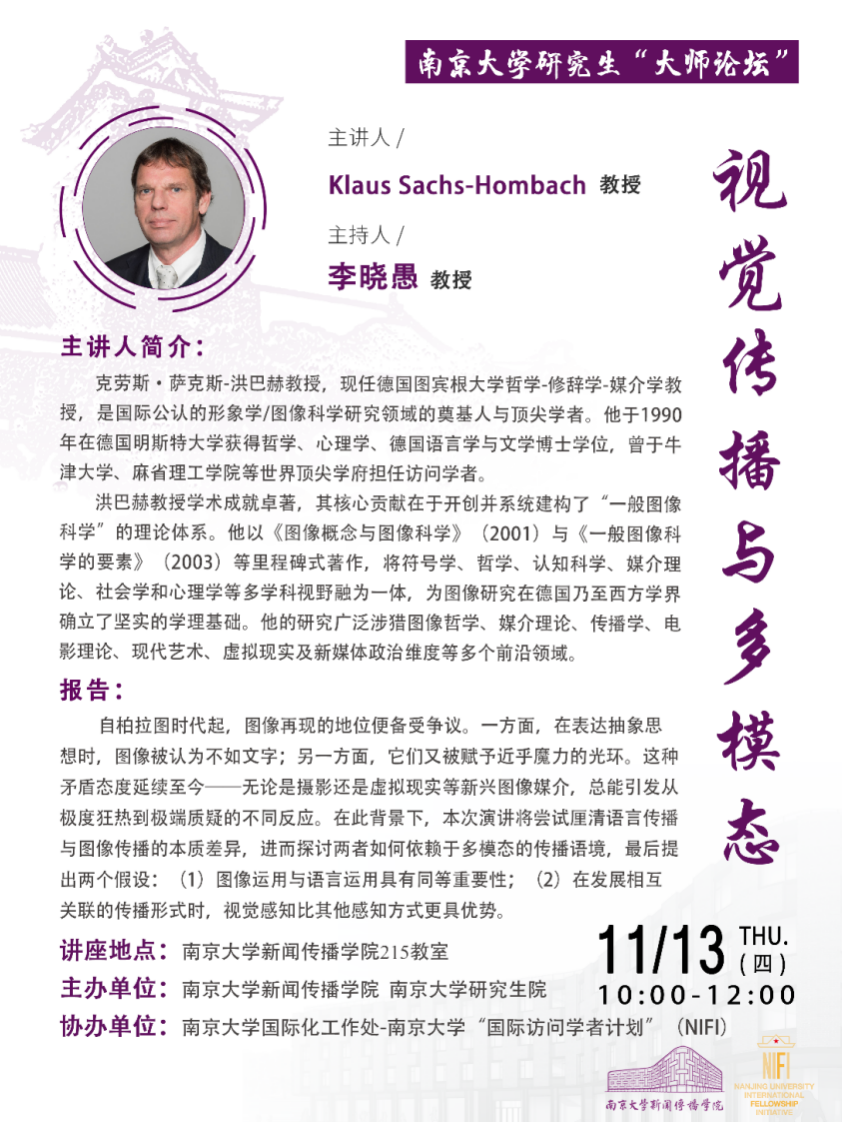
In today's increasingly image-dominated digital age, how do visuals and language jointly shape human cognition and communication? On 13 November, 2025, Professor Klaus Sachs-Hombach from the Institute of Media Studies, Faculty of Humanities, at the University of Tübingen, Germany, was invited to the School of Journalism and Communication at Nanjing University (NJU) to deliver a lecture titled "Visual Communication and Multimodality." The event was hosted by the NJU School of Journalism and Communication and the Graduate School, co-organized by the Nanjing University International Fellowship Initiative (NIFI) of the International Office, and moderated by Professor Li Xiaoyu, attracting numerous faculty and students.
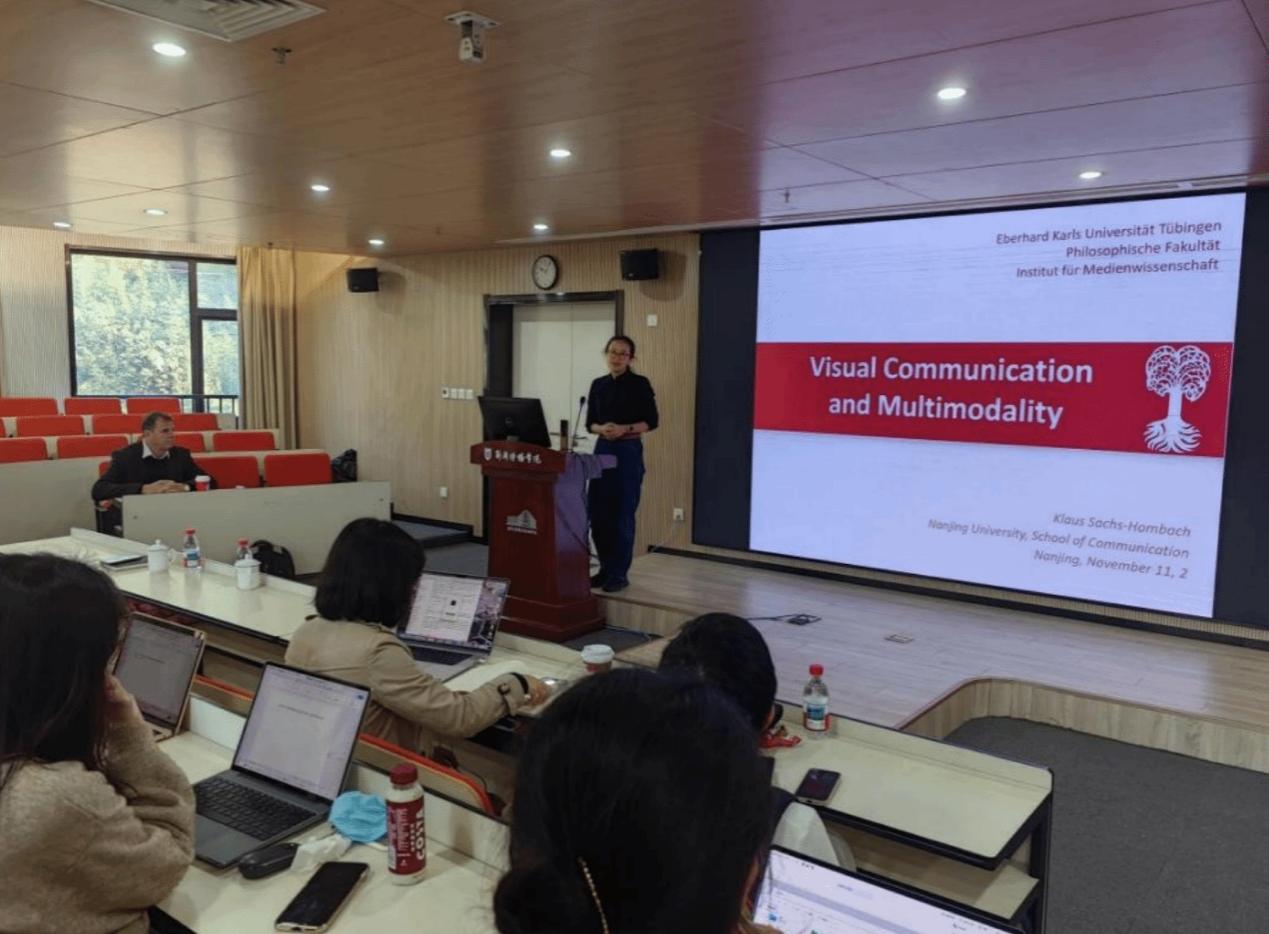
At the beginning of the lecture, Professor Li Xiaoyu pointed out that we live in a world saturated with images, deeply embedded in daily life. She noted that the human relationship with images has always been fraught with tension between excessive trust and outright suspicion, a tension that persists with emerging technologies like VR and AI. Professor Sachs-Hombach's lecture began from this reality, guiding the audience to explore the philosophical foundations of visual and multimodal communication.
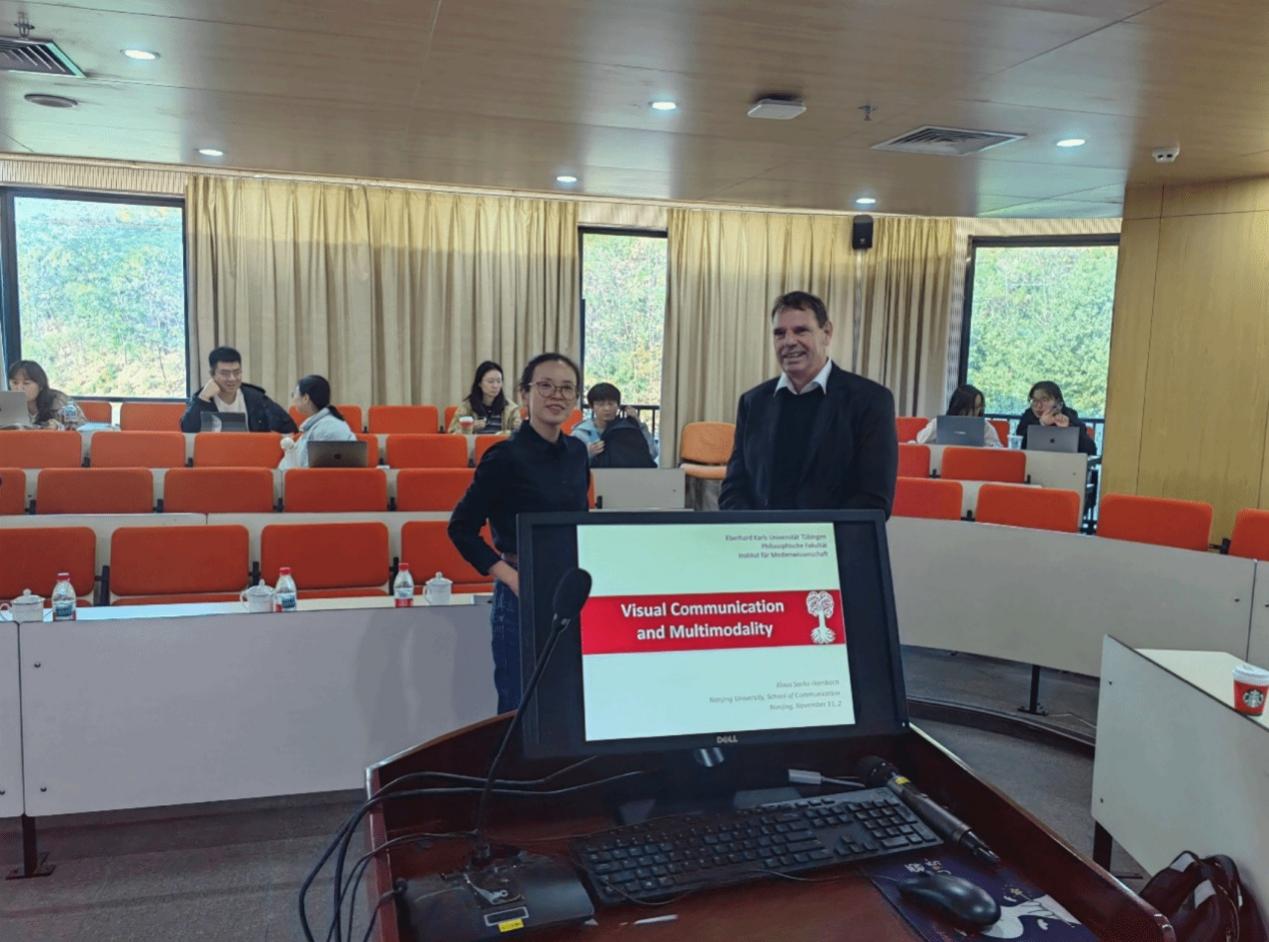
Professor Sachs-Hombach argued that images and language hold equally fundamental positions in human communication, with no simple hierarchy. Communication is inherently multimodal, where people co-construct meaning through various semiotic resources like images, language, and gestures. Vision plays a foundational role due to its integrative and spatial advantages.
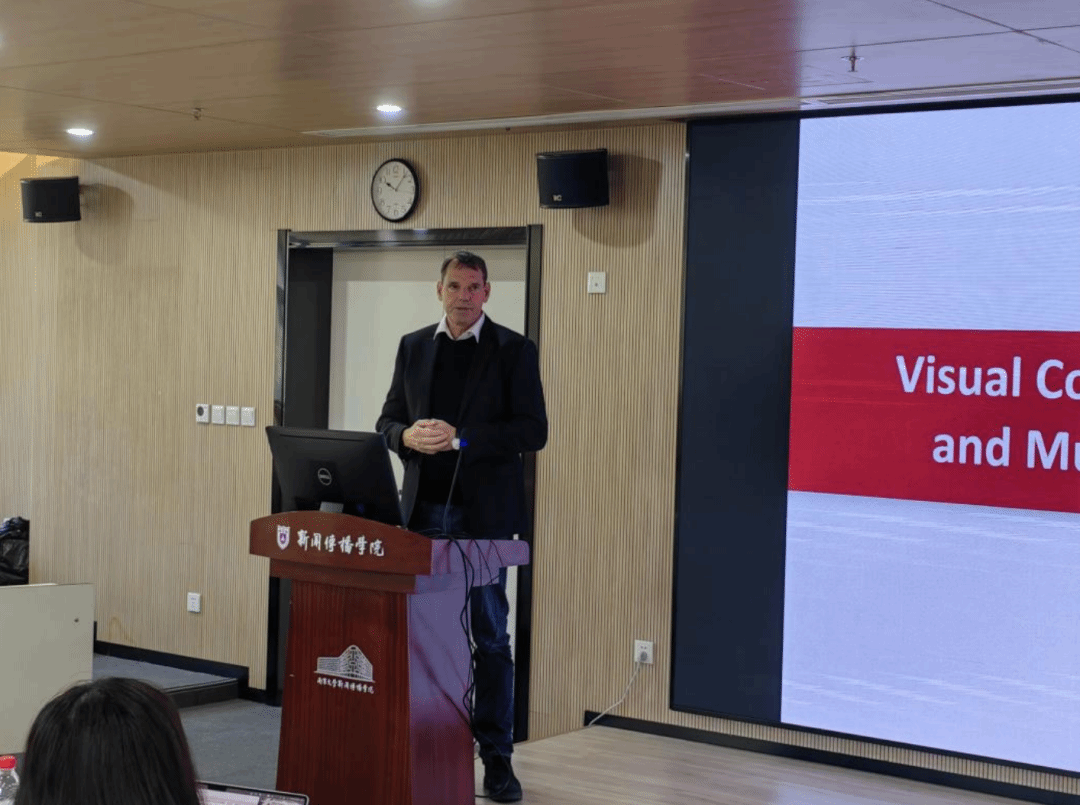
He reaffirmed the fundamental and interdependent nature of images and language, stressing that all communication is multimodal and that vision holds an irreplaceable cognitive position. The lecture concluded with an anecdote about an ancient Greek painting competition, highlighting the human capacity for "double consciousness", knowing something is an illusion yet becoming immersed in it. The lecture revealed the philosophical allure of image and multimodal communication.
During the Q&A session, Professor Li Xiaoyu summarized that Professor Sachs-Hombach's talk was "like a new pair of glasses," offering a fresh perspective to examine the surrounding world of images, noting its crucial importance for understanding our contemporary world. Following an in-depth discussion, the lecture concluded successfully.
Prof Dr Klaus Sachs-Hombach, i.R. | Profile
Klaus Sachs-Hombach, born 1957, is Professor of Media Studies (Focus on Media Innovation / Media Change)
The focus of Klaus Sachs-Hombach’s research work is on key topics such as theories of images, media, and communication in a historical and systematic perspective, the areas of aesthetic and cultural theory, and the philosophical problems of psychology and cognitive science. This recently gave rise to an interest in aesthetic and ethical problems of media change and modern image culture that was condensed in a number of essays on the theory of film, modern art, virtual reality, game studies, and the political dimension of the new media.
The deeper philosophical problem that accompanies these undertakings lies in the appropriate definition of the relationship between theory and practice, philosophy and science, conceptual reflection and empirical research. A delineation of the validity in both directions appears to be particularly appropriate with regard to questions concerning human self-perception. Philosophical rationality remains irrelevant if it is not processed in scientific theories and terminology; conversely, without philosophical reflection, scientific rationality is at risk of losing sight of its higher goals.